
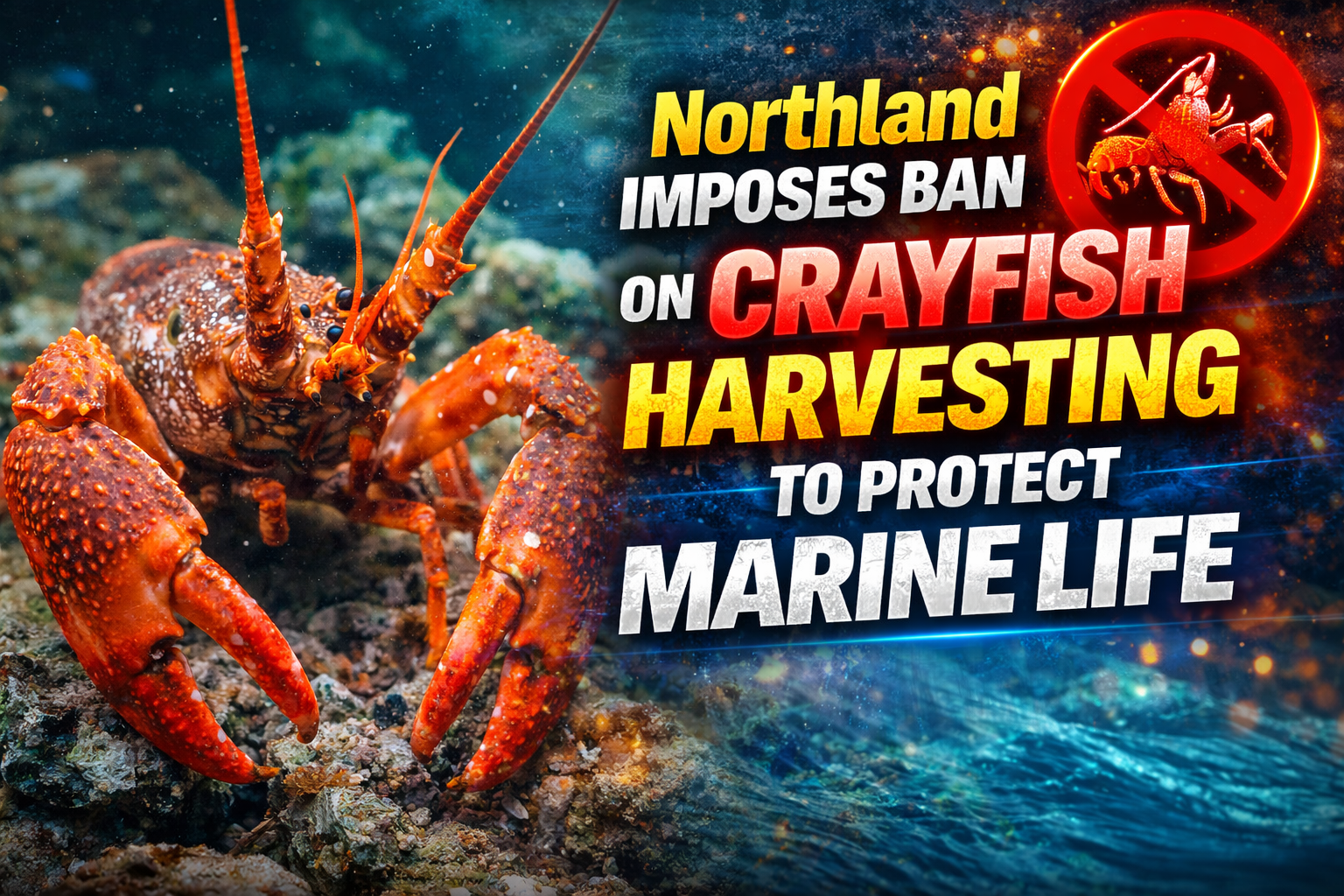
New Zealand’s Northland region has imposed a comprehensive five-year ban on both commercial and recreational crayfish harvesting along its east coast, effective from April 1, 2026. Announced by Oceans and Fisheries Minister Shane Jones, the closure targets the rapidly declining spiny rock lobster—commonly known as red crayfish—populations from the Hauraki Gulf up to Parengarenga Harbour south of North Cape. This drastic measure aims to halt overfishing, restore marine ecosystems, and prevent the spread of “kina barrens,” where exploding sea urchin populations devastate kelp forests and biodiversity.
Reasons Behind the Ban
Crayfish stocks off Northland’s east coast have plummeted due to decades of overharvesting, exacerbated by recreational divers and commercial pots. Scientific surveys show biomass at 20-30 percent of sustainable levels, far below the 40 percent legal threshold. High Court rulings in 2022 and 2025 compelled action, criticizing Fisheries New Zealand for ignoring ecosystem collapse.
Crayfish are keystone predators, controlling kina (sea urchins) that graze kelp forests—vital nurseries for fish like snapper and blue cod. Without crayfish, kina barrens proliferate: bare rockscapes devoid of life except urchins. Ocean warming hinders larval settlement, compounding pressures. Jones called it a “milestone” for Tai Tokerau’s coastal culture, balancing holiday traditions with long-term survival.
Commercial fishing in CRA1 (Northland fishery) had already self-imposed closures; recreational takes—up to 13,000 kg annually—pushed the crisis. Over 600 public submissions during August-September consultations urged full bans, reflecting iwi concerns and diver frustration.
Geographic Scope and Timeline
The ban spans CRA1 from Ohao Point (south of North Cape) to Cape Rodney at Hauraki Gulf, including Parengarenga Harbour. It extends partial CRA2 closures from Te Arai Point to inner Hauraki Gulf (already banned since April 2025). West coast Northland remains open but with recreational limits dropping to two red crayfish per person daily.
Implementation starts April 1, 2026—post-Christmas “last hurrah”—allowing Fisheries NZ education campaigns. Duration: five years, with reviews; marae customary permits under the 1992 Sealord deal persist as cultural exceptions. Nationwide recreational packhorse crayfish limit sets at three per day to prevent shifts.
Ecological Importance of Crayfish
Red crayfish (Jasus edwardsii) anchor Northland’s subtidal reefs. By eating kina, they sustain kelp (Ecklonia radiata) forests housing 80 percent of coastal fish species. Barrens now cover 40 percent of east coast reefs, up from 10 percent in 2000. Recovery models predict 50 percent biomass rebound in five years without fishing, restoring snapper nurseries and carbon-sequestering kelp.
Marine scientists like University of Auckland’s Benn Hanns praise the ban as “ecosystem-based management,” addressing urchin range expansion and warming impacts. Iwi like Ngāpuhi view kōura as taonga, tying health to cultural practices.
Economic and Social Impacts
Commercial fishers in Whangārei face hardship: CRA1 yields $20 million annually pre-decline. Voluntary quits softened blows, but full bans redirect effort westward. Recreational tourism—$5 million from charters—adapts to packhorse focus.
Northland’s $2 billion blue economy relies on healthy fisheries; bans prevent total collapse like paua stocks. Jobs shift to monitoring, aquaculture, and kina harvesting incentives. Jones pledged compensation reviews, but critics demand faster aid.
Socially, holiday divers lament traditions, but 70 percent of submitters supported closures. Iwi-led rāhui (customary bans) gain traction, blending Māori knowledge with science.
Table: Key Changes to Crayfish Rules
| Area/Fishery | Previous Rules | New Rules (April 2026) |
|---|---|---|
| East Coast CRA1 | 6 crayfish/day recreational; commercial pots | Full ban commercial/recreational (5 yrs) |
| West Coast CRA1 | 6 red crayfish/day | 2 red crayfish/day |
| Nationwide Packhorse | No limit | 3/day max |
| Inner Hauraki Gulf | Closed since April 2025 (3 yrs) | Extended partial CRA2 closure |
| Customary Takes | Māui permits | Retained for marae |
Reactions from Stakeholders
Minister Jones anticipated backlash: “Harsh calls for coastal culture,” but credited sectors for urging action. Commercial groups like Seafood New Zealand welcomed science-led decisions, despite pain. Legasea hailed it as “bold step” post-High Court failures.
Recreational fishers split: NZ Sportfishing supported limits but sought west coast equity. Environmentalists like Forest & Bird demanded 10-year bans. Iwi leaders endorsed, linking to kaitiakitanga (guardianship).
Opposition questioned timing—post-Christmas—and efficacy without poaching enforcement.
Enforcement and Monitoring
Fisheries NZ ramps up compliance: 20 extra officers, drone surveillance, and AI vessel tracking. Penalties: $500,000 fines, gear seizures. Dive cams mandatory for suspects; apps report violations.
Annual stock assessments via pot surveys and eDNA track recovery. Community rangers, funded by ban proceeds, patrol beaches.
Broader Conservation Context
This ban fits national reforms: Hauraki Gulf Marine Park expansions, kina harvesting boosts, and paua quotas. Global parallels include Australia’s east coast lobster closures and California’s kelp restoration.
Climate adaptation: marine protected areas (MPAs) double off Northland, buffering warming. Aquaculture trials farm juvenile crayfish for release.
Challenges: illegal foreign vessels, warming-driven barren spread.
Future Outlook and Recovery Prospects
Models forecast 60 percent biomass by 2031 if compliant, restoring kelp cover to 70 percent. Success metrics: snapper recruitment up 30 percent, kina down 50 percent.
Jones joked of packhorse at Waitangi feasts, signaling adaptation. Long-term, bans rebuild taonga species, sustaining $10 billion fisheries.
Northland’s crayfish ban marks turning point: from exploitation to stewardship. By sacrificing short-term catches, New Zealand safeguards marine heritage for mokopuna (grandchildren), proving bold action heals oceans.

Emma Brooks is a contributing writer at richlittleragdolls.co.nz, covering news, community updates, and trending stories across New Zealand and Australia. Her work focuses on delivering clear, accurate, and reader-friendly reporting that helps audiences stay informed about regional and national developments.










Leave a comment