
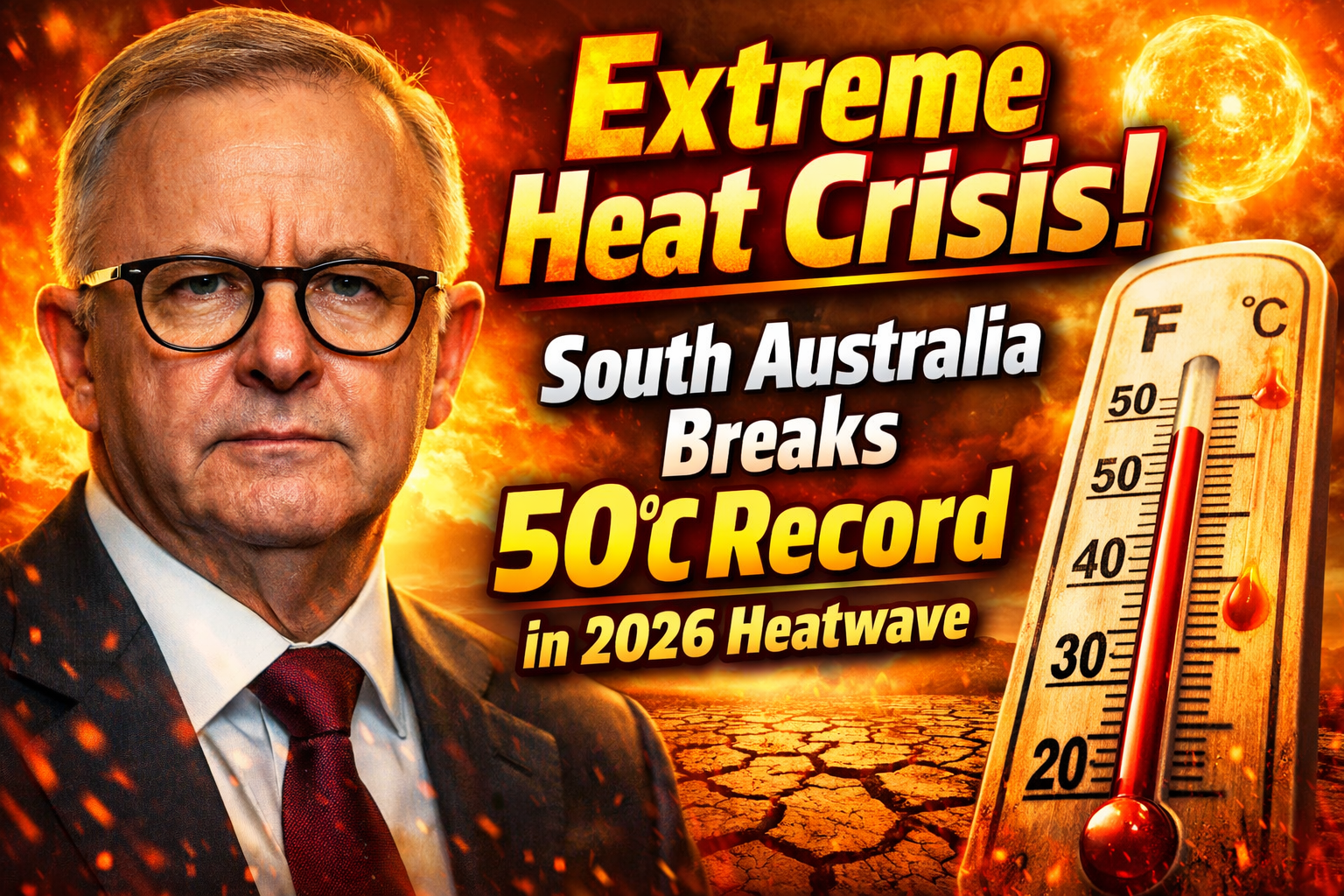
South Australia’s Port Augusta and Andamooka shattered temperature records by hitting 50°C during a brutal late-January heatwave that gripped southeastern Australia. This unprecedented event, lasting over a week with daily highs above 40°C, exposed vulnerabilities in power grids, public health systems, and emergency responses across the region.
The Onset of a Historic Heat Dome
The heatwave struck in late January 2026, forming a massive high-pressure system or heat dome over southeastern Australia. This blocked cooler southern air, trapping scorching conditions for eight consecutive days. South Australia bore the brunt, with inland areas baking under relentless sun and minimal overnight relief.
Port Augusta Airport clocked 50.0°C on January 30, the southernmost such reading in Australian history. Andamooka matched it a day earlier. These peaks capped a week where temperatures routinely topped 48°C, rivaling the infamous Black Summer of 2019-2020. The Bureau of Meteorology issued severe warnings, urging residents to avoid outdoors during peak hours.
Coastal fringes saw some moderation from sea breezes, but inland towns sweltered. The event’s duration—seven to eight days above 40°C—marked it as one of the longest in decades for vast inland stretches.
Peak Temperatures Across Regions
South Australia dominated headlines. Renmark hit 49.6°C mid-week, Ceduna 49.5°C, and stations like Tarcoola (49.7°C) and Woomera (49.6°C) tumbled records. New South Wales’ Pooncarie reached 49.7°C, Victoria’s Walpeup and Hopetoun 48.9°C, and Queensland’s Thargomindah 48.5°C.
Adelaide endured its hottest night on record at 31°C, followed by a 41°C daytime high. Melbourne eyed 45°C, its hottest in seventeen years. Even Tasmania’s Ouse hit 37°C. These weren’t isolated spikes; entire regions logged their hottest January days ever.
Meteorologists noted the heat’s intensity pushed 21°C above January averages. Overnight lows above 30°C prevented cooling, amplifying risks.
Devastating Human Health Toll
Hospitals overflowed as heat-related illnesses surged. Elderly residents, outdoor workers, and those without air conditioning suffered most. Paramedics reported hundreds of callouts daily for heat stroke, exhaustion, and dehydration. Vulnerable groups—low-income families, homeless individuals, and rural communities—faced acute dangers.
At least a dozen deaths linked directly to the heatwave, though official tallies awaited coronial reviews. Schools closed, public pools filled beyond capacity, and shopping centers became makeshift refuges. Mental health hotlines saw spikes in distress calls amid the oppressive conditions.
Tradies and farmers described unbearable worksites, with machinery overheating and livestock perishing. Personal stories emerged of families fleeing homes without power, seeking solace in cooled community centers.
Infrastructure Under Siege
Power grids buckled under peak demand. South Australia’s network experienced rolling blackouts, affecting tens of thousands. Air conditioners strained, leading to transformer failures and transmission line sags. Authorities urged energy conservation, but hot nights offered no respite.
Roads warped, trains delayed from heat kinks, and airports managed flight disruptions. Fire bans blanketed the state as dry lightning sparked spot fires. Water restrictions loomed in parched towns, with reservoirs at critically low levels.
The renewable-heavy grid highlighted vulnerabilities; solar panels underperformed in extreme heat, while wind stalled under the dome.
Environmental and Ecological Fallout
Bushfires ignited across the arid interior, fueled by tinder-dry vegetation. Smoke blanketed cities, worsening air quality and respiratory woes. Coral reefs off South Australia bleached further, compounding prior marine heatwaves.
Wildlife suffered mass die-offs. Kangaroos, emus, and bats collapsed from exhaustion, while fish kills filled drying waterways. Native plants wilted, threatening biodiversity in fragile ecosystems. Scientists warned of long-term shifts in species distributions.
Agricultural losses mounted, with crops failing and orchards dropping fruit. Riverland growers eyed halved yields, hitting export markets.
Government and Emergency Responses
Premier Peter Malinauskas declared a state of heightened alert, mobilizing extra resources. Cooling hubs opened in schools and libraries, water stations dotted streets, and transport offered free air-conditioned rides. The Red Cross distributed hydration packs, targeting at-risk groups.
BOM’s warnings evolved to extreme levels, predicting the southerly change that finally broke the heat on February 1. Temperatures plunged 10-18°C overnight, bringing relief but flash flood risks from saturated soils.
Federally, climate ministers convened urgently, pledging grid upgrades and heat-proofing urban areas.
Heatwave Intensity Table
| Location | Peak Temperature | Record Broken? | Days Over 40°C | Notable Impacts |
|---|---|---|---|---|
| Port Augusta | 50.0°C | Yes, new high | 8 | Power outages, hospital surge |
| Andamooka | 50.0°C | Yes | 7 | Wildlife deaths, fires |
| Renmark | 49.6°C | Yes | 6 | Crop losses, road closures |
| Ceduna | 49.5°C | Hottest ever | 7 | Train delays, blackouts |
| Tarcoola | 49.7°C | Yes | 8 | Bushfires, evacuations |
| Adelaide | 41°C (night 31°C) | Hottest night | 5 | School closures, alerts |
| Melbourne | 45°C | Near record | 4 | Urban heat island strain |
This table captures the crisis’s scale, showing prolonged exposure across key sites.
Linking to Climate Change Dynamics
Experts attribute the heatwave’s ferocity to human-induced warming. Australia’s climate has warmed 1.5°C since records began, loading the dice for extremes. Heat domes intensify under a hotter baseline, with models predicting such events tripling by 2050.
CSIRO analysis confirmed the 2026 event’s fingerprints: slower weather patterns from jet stream wobbles, amplified by Arctic melt. Southern Hemisphere-wide heat—from Argentina to South Africa—signaled global patterns.
Skeptics questioned timing amid La Niña transitions, but consensus held: climate change made it hotter, longer, and more likely.
Adaptation Challenges and Lessons Learned
The crisis exposed gaps in resilience. Urban heat islands baked cities, lacking green corridors or cool roofs. Remote communities, dependent on diesel generators, fared worst. Equity issues arose, with Indigenous groups in arid zones hit hardest.
Post-event reviews urged investments: smarter grids with batteries, mandatory heat plans for buildings, and expanded early warning systems. Community education on hydration and cooling proved vital.
Forward-thinking councils explored cool pavements and tree canopies. Nationally, calls grew for phasing out coal faster and bolstering renewables against heat dips.
Forging a Resilient Future
South Australia’s 50°C milestone marks a grim threshold, thrusting climate urgency into daily reality. The heatwave tested limits, claiming lives, straining systems, and scarring landscapes. Yet, the swift cool change offered hope—and a window for action.
Recovery focuses on replanting, grid repairs, and supporting farmers. Politically, it fuels debates on emissions targets ahead of global summits. For residents, it etched memories of unrelenting heat, spurring personal adaptations like home retrofits.
Ultimately, this crisis demands collective resolve. By heeding warnings, investing wisely, and cutting emissions, Australia can blunt future blows. The 2026 heatwave stands as a clarion call: adapt now, or face fiercer infernos ahead.

Emma Brooks is a contributing writer at richlittleragdolls.co.nz, covering news, community updates, and trending stories across New Zealand and Australia. Her work focuses on delivering clear, accurate, and reader-friendly reporting that helps audiences stay informed about regional and national developments.









Leave a comment