

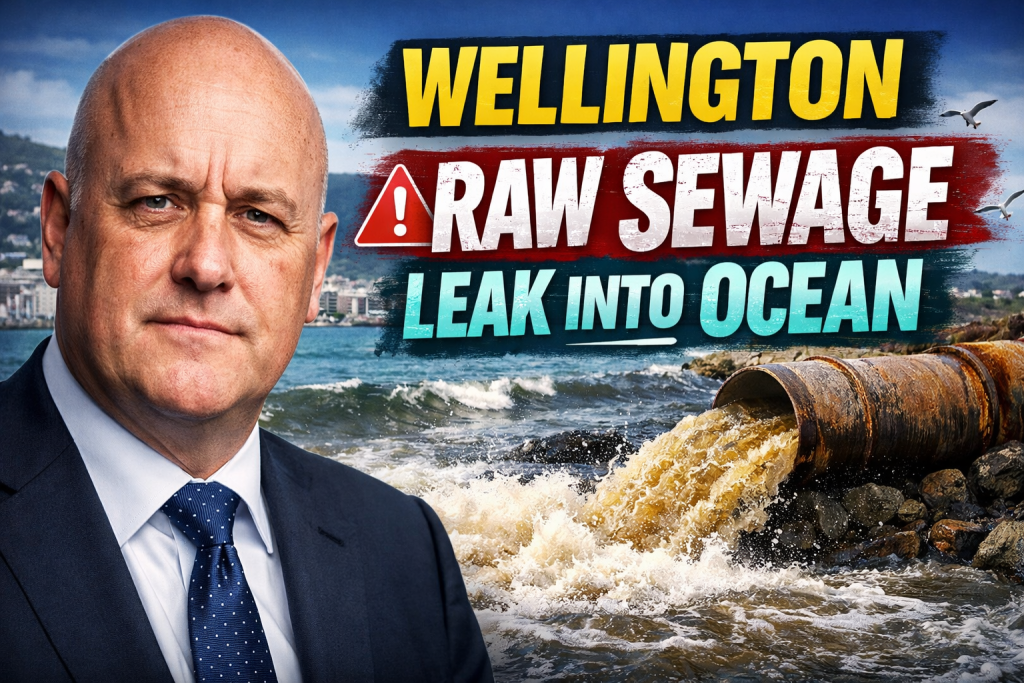
Wellington’s southern coastline faces ongoing fallout from a massive raw sewage leak that began in early February, with untreated wastewater still intermittently spilling into the ocean. Local authorities have issued repeated health warnings, while environmental groups demand accountability amid slow repairs to the crippled Moa Point treatment plant.
Incident Timeline
The crisis erupted on February fourth when heavy rainfall overwhelmed the Moa Point Wastewater Treatment Plant, New Zealand’s capital’s primary facility handling sewage for over half a million residents. A blockage in the main 1.8-kilometer outfall pipe caused backups, flooding lower levels and destroying eighty percent of critical equipment like pumps and screens.
Initially, around seventy million liters of raw sewage daily poured through an emergency five-meter pipe near Tarakena Bay, directly contaminating coastal waters. By mid-February, partial operations resumed on the long outfall into Cook Strait, screening out debris like wet wipes but still discharging partially treated waste during peaks.
As of early March, a fresh leak emerged on Marine Drive in Eastbourne, with treated wastewater entering stormwater and reaching the shoreline around 735 Marine Drive. Wellington Water estimates repairs by early next week, but the Hutt City Council faces a nearly seven hundred million dollar bill to replace the aging sewer outfall pipe entirely.
No-swim zones blanketed southern beaches like Lyall Bay, Owhiro Bay, and Island Bay for weeks, with a partial rahui lift but ongoing “swim at own risk” advisories. Mayor Andrew Little staged a symbolic swim to signal partial recovery, yet public trust remains eroded.
Latest Operational Updates
Wellington Water reports the main plant now pumps nine hundred liters per second through the long outfall during normal flows, minimizing short-pipe use. Crews work around the clock to maximize capacity, but peak demands—like morning flushes—still force backups.
A national inquiry probes the failure, scrutinizing underinvestment and maintenance lapses. Officials admit early warning signs on discharge pressures went unheeded. Veolia, the plant operator, stays silent amid the probe, while new entity Tiaki Wai prepares to take over water services in July under coalition reforms.
Recent Eastbourne incident adds urgency—crews isolated the leak, but coastal contact risks persist at low levels. Broader network strains surface: chronic pipe cracks and overflows plague the region, exacerbated by wet weather.
Health authorities monitor bacteria levels daily, posting updates via regular beach reports. Seagulls scavenging waste on shores spark outrage, with signs warning against pet walks and seafood gathering.
Public Health Concerns
Raw sewage introduces pathogens like E. coli, viruses, and chemicals into recreational waters, posing infection risks via skin contact, ingestion, or inhalation. Surf lifesaving clubs report unavailable offshore data hampers safety calls, leaving swimmers vulnerable.
No widespread illness clusters emerge yet, but doctors urge vigilance for gastrointestinal issues, ear infections, and wounds. Vulnerable groups—children, elderly, immunocompromised—face highest threats. Dog owners note pet sicknesses from beach exposure.
Food safety alerts ban shellfish harvesting indefinitely in affected zones, hitting local fisheries. Commercial operators pivot to safer grounds, but recreational divers and foragers suffer losses.
Longer-term, antibiotic-resistant bacteria from human waste could embed in sediments, complicating future outbreaks. Officials stress handwashing and showering post-exposure.
Environmental Damage Assessment
The spill ravages Wellington’s south coast ecosystem, a biodiversity hotspot with kelp forests, reefs, and sponge gardens. Untreated effluent smothers marine life, spiking nutrients that fuel algal blooms and oxygen depletion.
Kelp beds—vital fish nurseries—suffer direct smothering, with fronds clogged by solids. Deep reefs host fragile sponges and corals now exposed to fecal matter, disrupting filter-feeding. Ocean currents spread contaminants kilometers offshore, tainting Cook Strait.
Department of Conservation flags immediate threats to ecological functions: fish kills reported in shallows, shellfish beds contaminated beyond safe levels. Seabirds and marine mammals ingest waste via food chains, risking bioaccumulation of toxins.
Duration matters—weeks of discharge amplify harm versus one-off events. Wind and tides dictate spread; southerlies push plumes toward protected reserves. Full damage tallies await sediment sampling and species surveys.
| Impact Area | Observed Effects | Recovery Timeline |
|---|---|---|
| Coastal Beaches | Bacterial spikes, debris piles | Months with monitoring |
| Kelp Forests | Smothering, nutrient overload | Years if roots survive |
| Reefs and Sponges | Toxin uptake, die-off | Potentially permanent |
| Shellfish Beds | Harvest bans, mortality | Seasonal reseeding needed |
| Open Ocean | Plume dilution, fish exposure | Faster via currents |
This table summarizes key zones, blending immediate and lingering risks.
Marine Life Disruption
Fish populations near outlets show stress—schools scatter, feeding halts amid turbid waters. Bottom-dwellers like kina and paua ingest sludge, concentrating heavy metals in tissues.
Predators higher up—rays, sharks, seals—face secondary poisoning. Pāua fisheries, culturally vital, halt indefinitely. Birds like gulls thrive unnaturally on carrion, altering foraging patterns.
Microplastics and wet wipes exacerbate: non-biodegradable debris entangles wildlife, entering guts. Endocrine disruptors from pharmaceuticals persist, skewing reproduction in shellfish and fish.
Conservationists decry pipe placement between reefs, questioning ocean discharge logic. Alternatives like advanced treatment or land reuse gain traction in debates.
Economic Repercussions
Tourism takes a hit—summer beaches empty, surf contests cancel, drawing fewer visitors. Hotels report drop-offs, with social media amplifying “sewage capital” stigma.
Local businesses suffer: kayak rentals idle, cafes near beaches quiet. Fisheries losses mount into millions, with export bans on contaminated catches.
Repair costs balloon—councils scramble for funding amid a seven hundred million outfall replacement. Ratepayers face hikes, sparking backlash against past underfunding.
Insurance claims surge for cleanup and liability. National probe could trigger fines or lawsuits, straining Wellington Water’s budget.
Government and Community Response
Mayor Little calls it catastrophic, vowing systemic fixes. Government accelerates water reforms, empowering Tiaki Wai for upgrades. Regional councils pledge joint investment, eyeing central grants.
Iwi leaders invoke rahui, blending mātauranga Māori with science for recovery plans. Surf clubs push for real-time buoy data on currents and bacteria.
Protests swell—residents rage at neglected infrastructure, demanding accountability. Petitions urge zero-discharge policies, phasing ocean pipes.
Experts like Pat Dougherty admit chronic issues, backing probes into overlooked warnings. New legislation targets underinvestment, mandating resilience audits.
Long-Term Remediation Strategies
Short-term: bolster screening, deploy booms to contain surface waste, intensify pumping. Long outfall restoration prioritizes full capacity by autumn.
Medium-term: pipe inspections via drones, targeted replacements in hotspots. Backup generators prevent power failures.
Visionary fixes: tertiary treatment for nutrient stripping, recycled water for irrigation. Public campaigns cut wet wipes, easing blockages.
Monitoring networks expand—underwater sensors track plumes, satellite imagery maps spreads. Community science apps report sightings, aiding models.
International lessons apply: Singapore’s deep tunnels, Australia’s UV disinfection inspire Kiwi engineers.
Broader Infrastructure Lessons
Wellington’s woes mirror national trends—decades of deferred maintenance haunt pipes nationwide. Climate change intensifies: heavier rains overwhelm aging systems.
Urban growth strains capacity; population booms without proportional upgrades. Privatization debates flare—Veolia’s role questioned versus public control.
Successful models emerge: Christchurch’s post-quake rebuilds yield resilient plants. Funding innovations like green bonds attract ESG investors for cleanups.
Equity angles surface—low-income areas bear overflow brunt, amplifying calls for progressive financing.
Community Resilience and Recovery
Kiwis rally: beach cleanups draw hundreds, volunteers tally wildlife impacts. Schools weave lessons into curricula, fostering stewardship.
Eco-tourism pivots to unaffected sites, highlighting restoration efforts. Artists capture “sewage summer,” channeling grief into advocacy.
Mental toll acknowledged—beachgoers mourn lost playgrounds, but collective action rebuilds hope. Success stories from past spills, like Ninety Mile Beach, inspire.
Path Forward
Authorities eye full plant reboot by mid-year, with outfall swap accelerating. Health risks wane as dilution works, but ecosystem scars linger.
Public pressure catalyzes change—reforms promise modern infrastructure, ending ocean reliance. Wellington rebounds, turning catastrophe into catalyst for sustainability.
Vigilance endures: daily tests, transparent reporting rebuild faith. Nature’s resilience, paired with human resolve, points to brighter coasts ahead.

Emma Brooks is a contributing writer at richlittleragdolls.co.nz, covering news, community updates, and trending stories across New Zealand and Australia. Her work focuses on delivering clear, accurate, and reader-friendly reporting that helps audiences stay informed about regional and national developments.










Leave a comment