
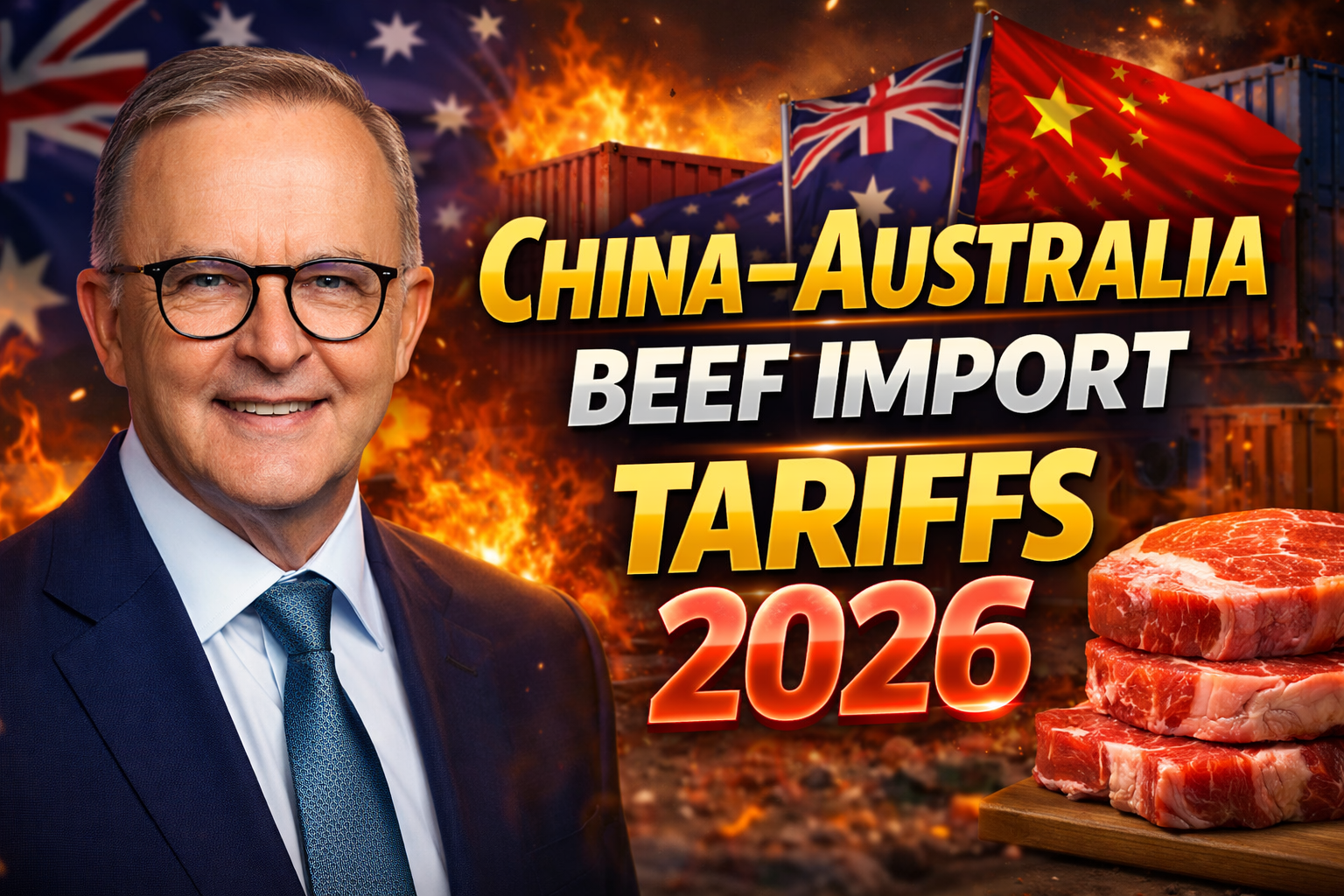
Australia and China have nurtured a robust beef trade partnership since the China-Australia Free Trade Agreement took effect a decade ago, slashing tariffs and boosting volumes. China emerged as Australia’s second-largest beef destination after the United States, absorbing premium grainfed cuts prized for tenderness and marbling. In the first eleven months of 2025 alone, Australia shipped over 295,000 tonnes, generating hundreds of millions in revenue and supporting thousands of jobs from paddock to port.
This surge stemmed from multiple factors: recovering post-pandemic demand in China, disruptions to American supplies amid escalating U.S.-China tensions under President Trump, and Australia’s reputation for high-quality, traceable beef. Grainfed exports to Greater China leaped 41 percent year-on-year by mid-2025, filling gaps left by non-renewed U.S. permits. Yet, China’s domestic cattle sector struggled with oversupply, plummeting prices, and weak consumer spending in a slowing economy, prompting Beijing’s protective probe launched late in 2024.
The free trade deal’s safeguard mechanism, designed to shield local industries from import surges, had triggered temporary tariffs before—12 percent in 2025 after volumes hit 190,000 tonnes early. But the 2026 measures represent a bolder, multi-year intervention, suspending parts of the agreement to prioritize national producers.
New Tariff Structure Explained
China’s Ministry of Commerce announced the safeguards on December 31, 2025, framing them as temporary relief for a beleaguered domestic industry. Starting January 1, 2026, total beef imports face a 2.7 million tonne quota—slightly below 2025’s pace—with country-specific caps. Australia receives approximately 200,000 to 205,000 tonnes at preferential zero-tariff rates under the FTA remnants.
Exceeding this triggers a punishing 55 percent tariff atop existing duties, rendering surplus shipments uneconomical. Measures span three years through 2028, with quotas inching up annually to allow gradual adjustment. Covered products include fresh, frozen, bone-in, and boneless beef, targeting the import flood blamed for eroding local prices and farmer incomes.
Beijing justifies the policy as non-discriminatory, applying to all major suppliers following an investigation revealing “serious damage” from cheap imports amid China’s economic slowdown. Small-scale domestic herds, often under 50 head, face extinction without intervention, officials argue.
| Country | 2026 Quota (tonnes) | 2025 Exports to China (Jan-Nov, tonnes) | Potential Tariff on Excess |
|---|---|---|---|
| Brazil | 1,100,000 | High volume, leading supplier | 55% |
| Argentina | 511,000 | Substantial growth | 55% |
| Australia | 200,000-205,000 | 295,000 | 55% |
| USA | 164,000 | Reduced due to tensions | 55% |
| Uruguay | 324,000 | Steady contributor | 55% |
This table highlights Australia’s constrained allocation relative to South American giants, underscoring competitive pressures.
Direct Trade Impacts on Australia
The quotas slash Australia’s access by about one-third from recent peaks, imperiling over one billion Australian dollars in annual exports. Processors face idle capacity, with grainfed plants—tailored for Chinese palates—hit hardest. Tim Ryan, CEO of the Australian Meat Industry Council, decried the move as “severe and unwarranted,” predicting curtailed supply for Chinese consumers craving safe, premium beef.
Rural communities brace for fallout: lower cattle prices, reduced slaughter volumes, and job losses in Queensland and New South Wales abattoirs. Exports doubled in late 2025 as importers front-loaded shipments, but 2026 volumes could plummet, forcing destocking or diversion. Analysts forecast a one-third drop, echoing smaller safeguard hits but amplified by duration.
Global Competitive Landscape
South America’s dominance intensifies under the new regime. Brazil, the top supplier, secures over half the quota at 1.1 million tonnes, leveraging scale and lower costs. Argentina follows at 511,000 tonnes, buoyed by grassfed efficiencies. Australia and the U.S. lag with smaller shares, reflecting China’s pivot to cheaper alternatives amid premium grainfed saturation.
This reallocates market power: Brazil could lose billions if volumes exceed caps, but its quota buffers the blow. Australia, prized for quality over volume, risks premium segment erosion as tariffs deter buyers. U.S. supplies, already curtailed by politics, face further squeeze.
Economic Ripples and Sector Challenges
Beyond exports, tariffs ripple through Australia’s economy. Beef generates billions yearly, employing rural heartlands and funding infrastructure. A billion-dollar hit equals roughly five percent of total beef exports, pressuring farmgate prices amid high input costs and dry conditions. Processors may idle plants, spiking unemployment in export hubs.
Consumers in China encounter higher prices or shortages of favored cuts, potentially spurring black-market premiums or shifts to pork. Domestically, oversupply could depress Australian retail beef values, though lean manufacturing beef demand from the U.S. offers partial offset.
Government revenue dips from lost duties, while trade tensions test mended ties post-wine and barley bans. Yet, Australia’s diversified portfolio—U.S. as top market—cushions severity.
Industry and Government Reactions
Australian officials expressed “disappointment,” urging dialogue without retaliation. Meat & Livestock Australia and councils vowed advocacy to both governments, scrutinizing fairness given Australia’s compliant history. Industry leaders like Ryan labeled restrictions “unfair,” favoring rivals who ramped volumes recently.
Producers pivot urgently: ramping U.S. shipments, eyeing Japan and Korea, and innovating value-adds like wagyu blends. Calls grow for federal aid—subsidies, marketing boosts—to weather the storm.
Diversification and Alternative Markets
Resilience defines Australia’s beef playbook. The U.S., absorbing record volumes of lean beef for burgers, stands ready to absorb redirected supply. Southeast Asia, Japan, and the Middle East beckon with growth appetites. Domestic processing upgrades and live exports to Indonesia provide buffers.
Long-term, traceability tech and sustainability credentials differentiate Australian beef, commanding premiums. Investments in northern development promise volume growth sans China reliance.
Future Outlook and Strategic Pathways
Prospects hinge on negotiation: quotas rise yearly, offering expansion windows if diplomacy prevails. China’s economy rebound could lift demand, easing domestic pressures. Worst-case, prolonged tariffs reshape global flows, benefiting Brazil long-term.
Australia eyes a record 2026 production despite hurdles, buoyed by herd rebuilding. Strategic stockpiling, FTA renegotiation, and WTO scrutiny loom as tools. Ultimately, adaptability—core to red meat’s success—will dictate recovery.

Emma Brooks is a contributing writer at richlittleragdolls.co.nz, covering news, community updates, and trending stories across New Zealand and Australia. Her work focuses on delivering clear, accurate, and reader-friendly reporting that helps audiences stay informed about regional and national developments.










Leave a comment