
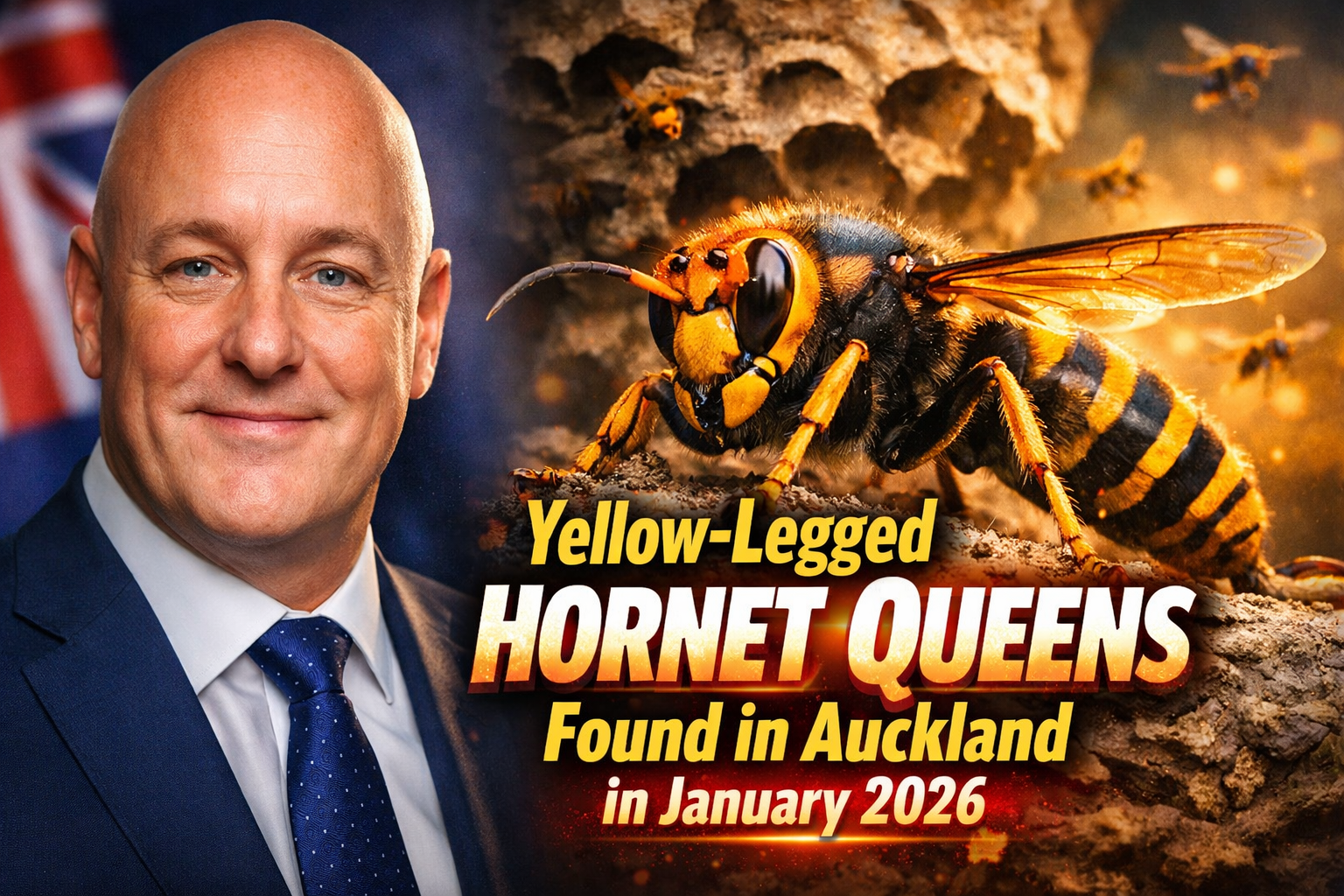
Yellow-legged hornet queens have been discovered in Auckland, putting New Zealand’s biosecurity teams into high gear during the summer of 2026. This invasive species poses serious threats to local bees and ecosystems, prompting urgent action to prevent establishment.
Introduction to the Discovery
The yellow-legged hornet, known scientifically as Vespa velutina, first appeared on radars in Auckland back in late 2025. By January 2026, multiple queens have turned up, mainly on the North Shore areas like Glenfield and Birkdale. Biosecurity New Zealand has confirmed dozens of these queens, many associated with nests, signaling a potential foothold if not addressed swiftly.
This development comes at a critical time, as summer conditions favor hornet activity. Public vigilance has played a key role, with thousands of sighting reports flooding in. The focus remains on containment within Auckland, with no confirmed spread beyond the city yet.
What is the Yellow-Legged Hornet
Key Physical Features
This hornet stands out with its mostly black body accented by thin yellow bands and a prominent thicker yellow band near the abdomen’s end. The legs are distinctive—dark near the body fading to bright yellow tips, unlike local wasps with uniform coloring. Queens measure up to 30 millimeters long, larger than common honeybees or wasps in New Zealand.
Workers are slightly smaller at around 20 millimeters, while males reach about 24 millimeters. Nests start small and smooth-surfaced in sheltered spots like eaves or sheds, later expanding into larger secondary structures high in trees.
Behavior and Life Cycle
Fertilized queens emerge in spring to build primary nests, producing initial workers. As summer progresses, colonies relocate to secondary nests that can house thousands. A single queen might generate 12,000 to 15,000 hornets per season, foraging aggressively on insects.
These hornets hunt by ambushing prey near hives, particularly targeting bees. They decapitate victims and feed bodies to larvae, showing ruthless efficiency. Aggression peaks near nests, where they sting repeatedly or even spit venom at intruders.
The Threat to New Zealand
Impact on Pollinators and Biodiversity
Yellow-legged hornets devour vast quantities of insects, with one nest consuming over 11 kilograms seasonally—bees making up around 40 percent of their diet. They raid honeybee colonies, causing foraging paralysis and up to 50 percent losses in affected areas. Native pollinators, lacking defenses, face devastation, rippling through plant pollination and ecosystems.
In invaded regions, honeybee colonies have dropped by 30 percent, hitting agriculture hard. New Zealand’s honey industry and wild flora stand vulnerable, as these hornets compete for food and prey without natural predators here.
Risks to Humans and Economy
Stings pack more punch than typical wasps due to size, potentially triggering anaphylaxis or worse in multiples. Group attacks near nests heighten dangers, especially for outdoor workers or children. Economic fallout includes honey production declines and control costs mirroring invasive wasps.
Unchecked spread could mirror Europe, where billions in damages accrue from biodiversity loss and beekeeping hits.
Timeline of the Auckland Incursion
Detections began October 17, 2025, with initial queens and small nests about a kilometer apart. By November, numbers climbed to 27 queens, seven workers, and 17 nests removed from North Shore hotspots. December saw surges to over 30 queens, with ground searches covering thousands of properties.
Entering January 2026, confirmations hit 45 queens—32 with nests—thanks to public tips exceeding 10,000. No workers dominated early finds, but trackers now tag them to trace nests. All remains confined to Auckland, with surveillance buffers expanding to 11 kilometers.
Biosecurity Response Efforts
Surveillance and Trapping
Teams have deployed hundreds of traps, ramped to over 600 in key zones, using sugar-yeast mixes or proteins. Ground sweeps hit over 2,100 properties, destroying nests on sight. International experts advise on tracking devices clipped to workers, guiding teams to hidden colonies.
Genetic analysis links specimens to a small founding population, boosting eradication hopes. Volunteers from councils and groups join property checks, focusing on eaves, fences, and trees.
Public Involvement
Over 10,270 notifications poured in, with 18 of 43 nests found via citizens. Apps and hotlines like 0800 809 966 streamline reports—photos first, no disturbances. “Hornet Hunt” campaigns urge backyard scans, emphasizing early summer queen hunts.
| Response Milestone | Key Actions | Outcomes |
|---|---|---|
| October 2025 | Initial detections, 135 traps laid | 5 queens confirmed, 2 nests |
| November 2025 | Traps to 600, 2,100 properties searched | 27 queens, 17 nests removed |
| December 2025 | Trackers trialed, buffer to 11km | 37 queens, secondary nest focus |
| January 2026 | Public reports peak | 45 queens (32 nested), ongoing sweeps |
Global Lessons from Past Invasions
Originating in Southeast Asia, this hornet hit France in 2004, spreading 100 kilometers yearly via flight and human aid. Now across Europe, densities reach nearly 5 nests per square kilometer. Beekeepers report massive colony losses, with control proving costly and partial.
Early interventions succeeded in spots like the UK, preventing establishment through trapping. New Zealand draws on these, acting while populations stay low and localized.
How You Can Help
Stay alert in gardens, parks, and while traveling—snap clear photos of suspects. Report via official channels without touching nests, as disturbance scatters queens. Avoid kill-traps due to bycatch; opt for observation or MPI lures if needed.
Beekeepers monitor hives closely, as first spots often come there. Check eaves, sheds, and low trees for smooth, papery nests differing from wasps’. Community efforts remain vital through February, when secondary nests peak.
Looking Ahead
Eradication odds look strong with contained spread and robust response. Summer months test resolve, as surviving nests balloon. Success here protects pollinators, economy, and outdoor life for years.
Biosecurity urges sustained vigilance—no complacency until cleared. If eradicated, this becomes a win for proactive defense against invasives.

Emma Brooks is a contributing writer at richlittleragdolls.co.nz, covering news, community updates, and trending stories across New Zealand and Australia. Her work focuses on delivering clear, accurate, and reader-friendly reporting that helps audiences stay informed about regional and national developments.










Leave a comment